GlossaryAI for interpreters
When all you have is the event name
A realistic interpreter preparation example when a client provides only an event name or subject area.
Synthetic example · no client data · English → Brazilian Portuguese
What the interpreter received
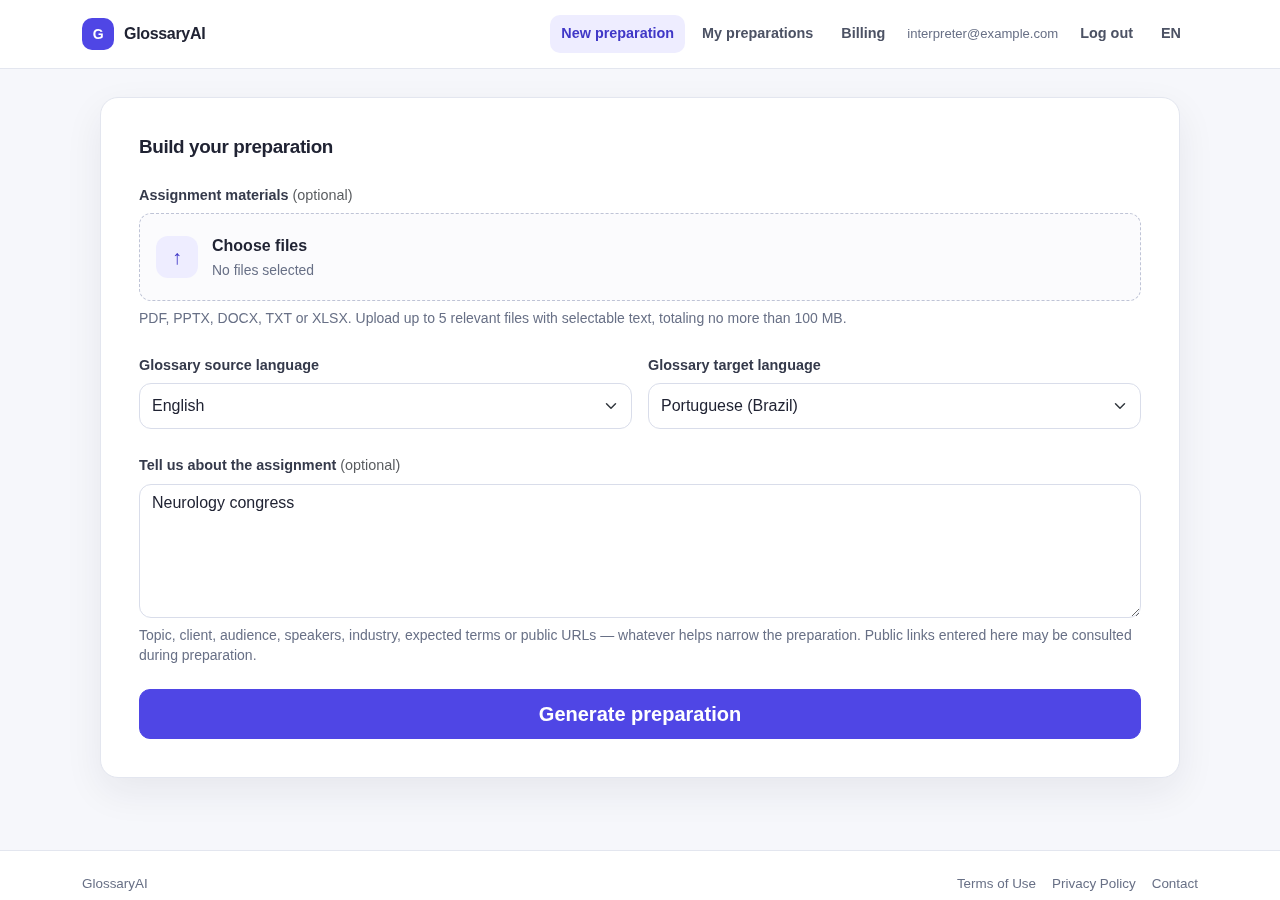
Assignment context
“Neurology congress”
Files: none
No agenda, speaker names or subspecialty were provided. A useful preparation must therefore cover the field broadly while avoiding claims about the actual program.
Synthetic preparation
Briefing
This assignment is a medical congress for a specialist audience in neurology. Likely discussions may involve diagnosis, treatment and research across cerebrovascular, epileptic, neurodegenerative, demyelinating and movement disorders. Because no program or speaker material is available, these are preparation areas rather than confirmed sessions.
Main topics
- neurological examination, diagnosis and imaging;
- stroke prevention and acute intervention;
- epilepsy and seizure management;
- neurodegenerative and demyelinating diseases;
- clinical trials, endpoints and adverse events;
- rehabilitation and quality of life.
Preparation notes
- Confirm whether “seizure” should be rendered as crise epiléptica; convulsão is narrower and may be inaccurate.
- Review common stroke acronyms and scales if cerebrovascular sessions are confirmed.
- Listen for distinctions between disease, syndrome, symptom and imaging finding.
- Keep drug names separate from mechanisms of action and therapeutic classes.
- Ask the client for the scientific program and speaker affiliations as soon as possible.
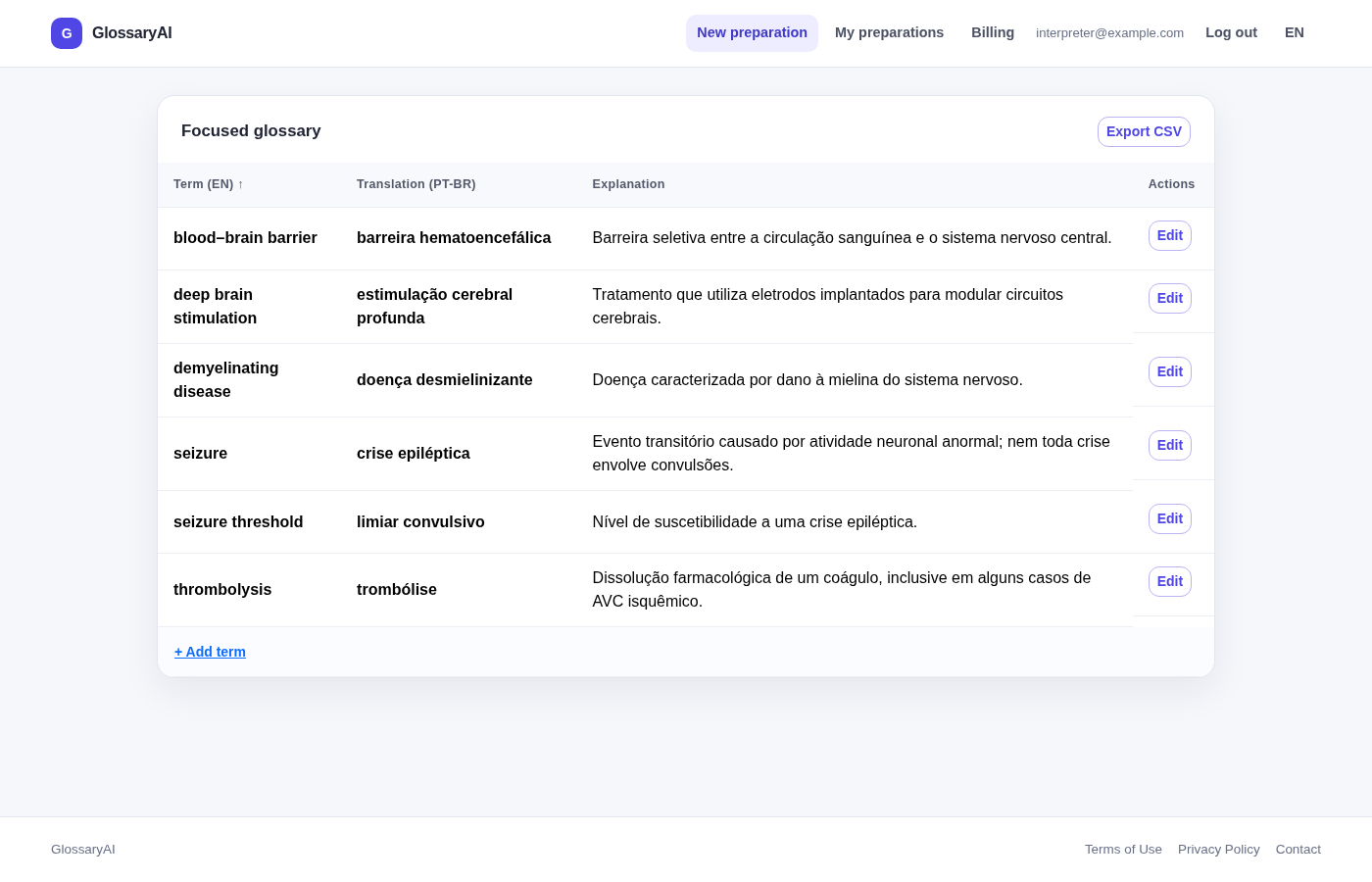
Focused glossary
| Term (EN) | Translation (PT-BR) | Explanation |
|---|---|---|
| blood–brain barrier | barreira hematoencefálica | Barreira seletiva entre a circulação sanguínea e o sistema nervoso central. |
| seizure | crise epiléptica | Evento transitório causado por atividade neuronal anormal; nem toda crise envolve convulsões. |
| seizure threshold | limiar convulsivo | Nível de suscetibilidade a uma crise epiléptica. |
| cerebrovascular accident | acidente vascular cerebral | Interrupção ou ruptura do fluxo sanguíneo cerebral; frequentemente abreviado como AVC. |
| thrombolysis | trombólise | Dissolução farmacológica de um coágulo, inclusive em alguns casos de AVC isquêmico. |
| demyelinating disease | doença desmielinizante | Doença caracterizada por dano à mielina do sistema nervoso. |
| neurodegenerative disease | doença neurodegenerativa | Condição associada à perda progressiva da estrutura ou função neuronal. |
| deep brain stimulation | estimulação cerebral profunda | Tratamento que utiliza eletrodos implantados para modular circuitos cerebrais. |
| differential diagnosis | diagnóstico diferencial | Comparação sistemática entre possíveis causas de um quadro clínico. |
| primary endpoint | desfecho primário | Principal resultado definido para avaliar um estudo clínico. |
| adverse event | evento adverso | Ocorrência médica indesejada durante um estudo ou tratamento, sem implicar causalidade automática. |
| informed consent | consentimento informado | Concordância dada após informação adequada sobre procedimentos, riscos e alternativas. |
How the interpreter uses it
This is a broad orientation, not a prediction of the program. The interpreter reviews the distinctions, marks uncertain preferred usage and requests the agenda. When better material arrives, it should replace assumptions with source-grounded preparation.
Compare this with the typical assignment, where the materials narrow the terminology substantially, or the large technical document set.
Ready to prepare an assignment?
Prepare an assignment